Minecraft is a ’sandbox’ video game where players can create structures and interact with the world around them by using a variety of different tools, such as a pickaxe for ‘mining’ and by assembling their creations with a number of different textured blocks.
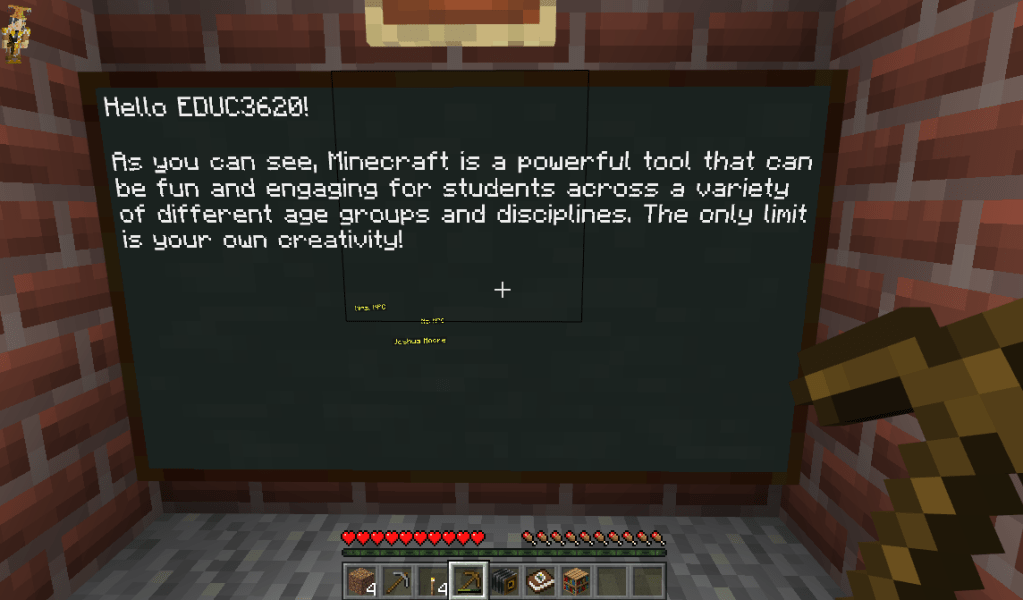
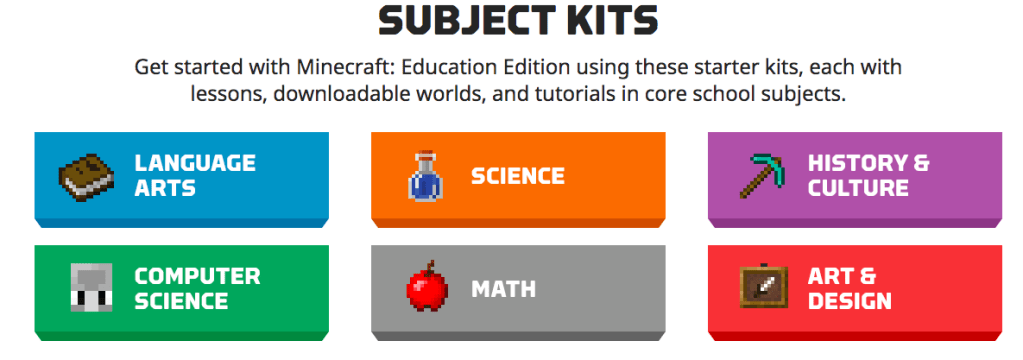
Minecraft can be used as a learning tool across any age group and has a huge variety of uses that can be applied to many different disciplines to help foster creativity with students. Lessons can be downloaded directly from the Minecraft Education Edition website or teachers can create their own lessons through the world builder feature. For example, a science lesson can be given on renewable energy where students are tasked with building their own home that is powered by renewable energy in a number of different biomes. Overby and Jones (2015) found that Minecraft was useful in art classes for developing programming skills digital art as well as encouraging collaboration between students. A key benefit to the use of Minecraft in the classroom is the possibilities it opens up for students to be creative. The game allows students to approach the tasks given to them in the lessons in any way they see fit, allowing to experiment without fear of failure and come up with their own creations. It is also a fun and engaging way to deliver content to students.
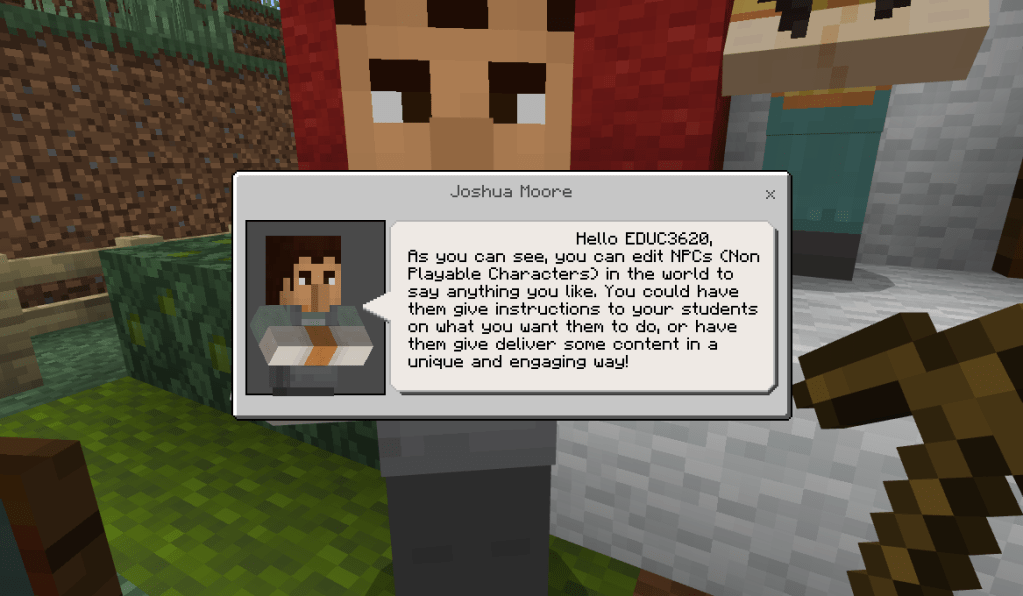
The game is open ended in nature, which is great for allowing students to be creative, however, some teachers may be apprehensive to engage a class in such an activity, especially if they are unfamiliar with video games or some other aspect of ICT resources (Loveless, Burton & Turvey 2005). Fortunately, the Education Edition of Minecraft comes with a tutorial mode that helps introduce teachers to the game. This is an important feature for teachers to best make use of Minecraft, as it helps illustrate the potential for learning the game has and also helps remove any apprehension a teacher might have when considering using an open ended activity, such as Minecraft, for learning and fostering creativity with students.
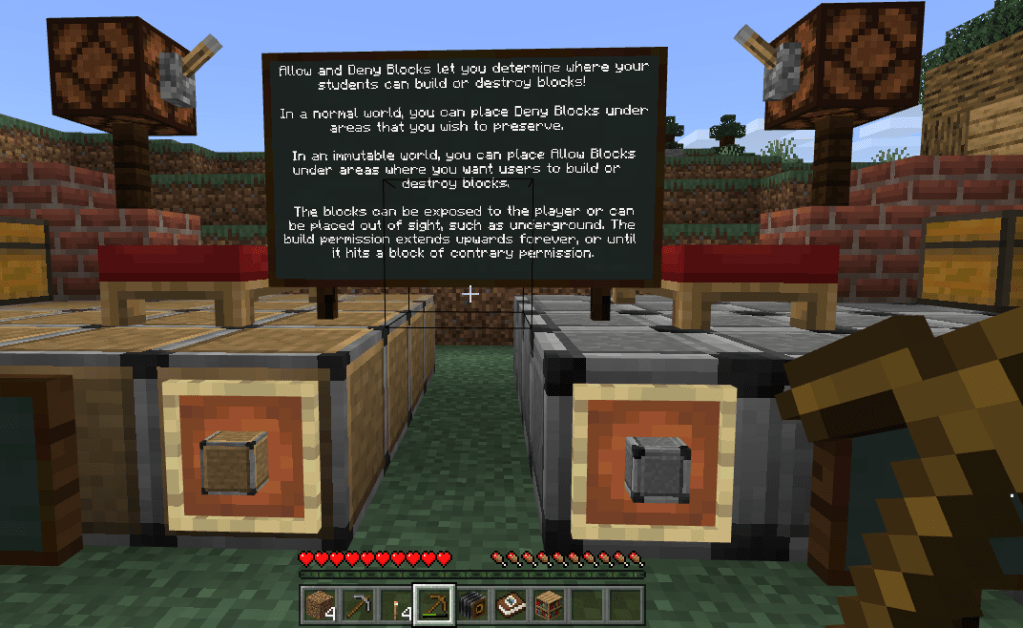
Whilst Minecraft can certainly be a useful tool to encourage creativity in the classroom, the freedom the game allows for can give opportunities for students to get distracted and go off task. The game does have a feature called “allow and deny” blocks (pictured below) that can be used to combat this somewhat, but it is still worth noting the potential for students to go off task. Despite some of the potential issues that come with using a video game as a learning tool, Minecraft should be taken seriously as a legitimate learning tool to help foster creativity.
References:
- Overby, A. & Jones, B.L., 2015. Virtual LEGOs: Incorporating Minecraft into the Art Education Curriculum. Art Education, 68(1), pp.21–27.
- Loveless, A., Burton, J., & Turvey, K. (2006). Developing conceptual frameworks for creativity, ICT and teacher education. Thinking Skills and Creativity, 1(1), 3-13.
 Joshua Moore's ePortfolio for EDUC3620
Hi Josh, this is really interesting! I know I would not have thought about using this technology in the classroom. Minecraft is such an fun online game and the students would really appreciate working with a technology most of them have previous experience with. It would be interesting to see how teachers in other subjects might teach using Minecraft. Thanks!
LikeLike
Thanks Nathalie,
The great thing about Minecraft is that it can be applied to almost any subject. I would recommend downloading the free demo of the education edition to get a more complete picture of the possibilities.
LikeLike